Views: 154 Author: Linnea Publish Time: 2026-09-14 Origin: Site
Glass splicing is a structure in which different door components are combined to create an area for glass installation.
In simple terms, instead of cutting one complete opening directly into an intact door panel, several structural components are assembled together to form the glass installation area.
This method can commonly be found in certain traditional steel doors and iron door designs. Since the door panel and the glass installation structure are made from different components, visible structural joints may appear after assembly. Around the glass area, some metal components may extend slightly from the surface, creating a raised or protruding appearance.
From a manufacturing perspective, glass splicing requires different components to be processed, positioned and assembled accurately. The final appearance therefore depends on the design of the components, their dimensions and the quality of the welding or assembly process.
When properly designed and manufactured, this structure can still provide a stable area for glass installation and meet the requirements of standard steel doors.
One of the main characteristics of glass splicing is its visible structural appearance. For traditional door designs or markets where structure and cost control are important, this method can be a practical solution.
When looking at a product image, if the glass area is surrounded by visible assembled metal components and the door panel does not appear to have one complete cut-out opening, it is generally a glass splicing structure.

Unlike glass splicing, a door panel cut-out is created by directly cutting an opening into the door panel for glass installation.
During production, the required opening is processed according to the glass size and design position. The glass is then installed into the opening using a glass frame, glazing bead, decorative frame or another fixing structure.
From the front of the door, this method usually creates a cleaner and more defined appearance. The glass area has a relatively complete frame, making the boundary between the glass and the door panel clear and organized.
For this reason, cut-out structures are commonly used in modern steel doors, entrance doors and designs that focus on clean lines and contemporary appearance.
The key characteristic of a cut-out structure is that the glass installation area is directly formed within the door panel itself.
For example, a steel door panel may initially be a complete surface. During production, a rectangular, square or specially shaped opening is cut according to the design. The glass and its surrounding frame are then installed into this opening.
Depending on the product design and market requirements, the opening can be combined with different types of decorative glass, frosted glass, laminated glass or other door glass options.
For customers looking for a modern and clean appearance, the cut-out method provides clearer lines and makes the glass area more visually integrated into the overall door design.
Therefore, when identifying the structure from a product image, a simple way to understand it is:
If a complete glass opening is directly formed on the door panel and the glass is surrounded by a clear, continuous frame, it is generally a cut-out structure.
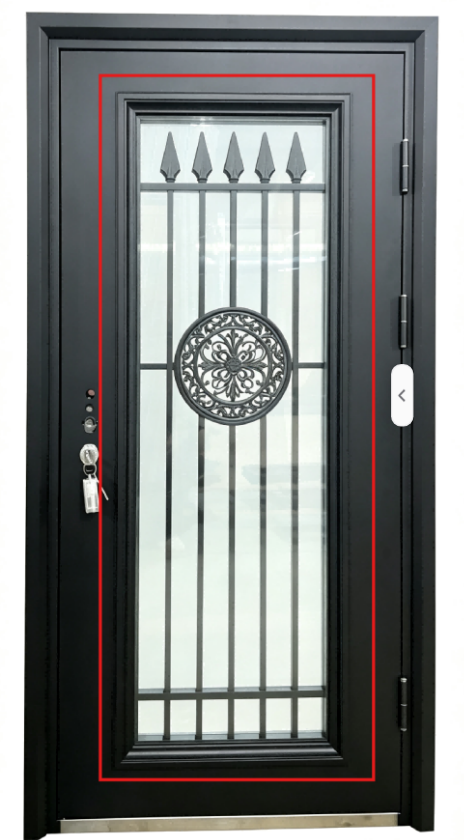
Although both glass splicing and cut-out structures are used to install glass into steel doors, their main difference lies in how the glass installation area is created.
Glass splicing relies on the combination of different structural components. As a result, visible joints or raised metal sections may appear around the glass area.
A cut-out structure, on the other hand, creates the glass opening directly on the door panel and then uses a frame or fixing system to install the glass. This usually gives the door a cleaner and more organized appearance.
In terms of visual style, the cut-out method is often more suitable for modern, simple and detail-oriented door designs. Glass splicing can be more suitable for traditional door structures or products where a particular construction method and cost target are required.
From a manufacturing perspective, cut-out production requires accurate control of the opening position, dimensions and edge treatment. Any deviation may affect the installation of the glass or surrounding frame. Therefore, production equipment, tooling, processing accuracy and assembly quality all play an important role in the final result.
For buyers, there is no absolute answer as to which method is better. The right choice depends mainly on the target market, product positioning, appearance requirements and cost expectations.
For example, if a distributor is targeting the modern steel door market and wants a clean and well-defined glass area, a cut-out structure can be a suitable option. If the target market focuses more on traditional steel door designs, structural features and cost control, glass splicing can also be a practical choice.
For a professional door manufacturer, the key is to provide the right production solution according to the customer's product positioning. PHIPULO can customize door configurations according to requirements such as door design, dimensions, surface finish and glass structure, providing flexible door solutions for distributors, wholesalers and construction projects.
Glass splicing and door panel cut-out are both practical methods for installing glass in steel and iron doors, but they are not the same manufacturing structure.
Glass splicing mainly uses multiple structural components to create the glass installation area, which may result in visible joints or raised metal sections. Door panel cut-out, in contrast, creates an opening directly in the door panel and uses a surrounding frame or fixing structure to install the glass, generally providing a cleaner and more organized appearance.
Understanding this difference helps buyers read product images more accurately and communicate door specifications more clearly with manufacturers. Depending on the target market, design style and cost requirements, the appropriate glass installation method can be selected for each door project.