Views: 100 Author: Jimmy Publish Time: 2026-10-28 Origin: Site
Pivot doors and conventional hinged doors can both be used for homes, villas, commercial buildings, and large entrances. However, they differ significantly in their operating systems, weight distribution, opening paths, installation requirements, sealing performance, and cost.
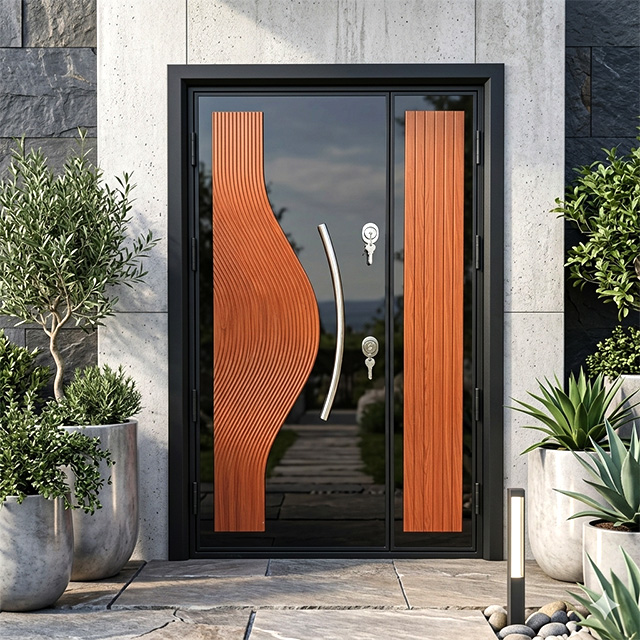
A pivot door rotates on pivot hardware installed at the top and bottom of the door leaf. The pivot axis may be close to the edge or offset toward the center. A hinged door rotates on hinges attached to one side of the frame. Pivot doors are often selected for large architectural entrances, while hinged doors generally offer simpler installation, familiar operation, and easier weather sealing.
A pivot door rotates around a vertical axis created by top and bottom pivot points. This axis does not need to be positioned at the edge. It can be offset toward the center of the door to create a distinctive opening movement.
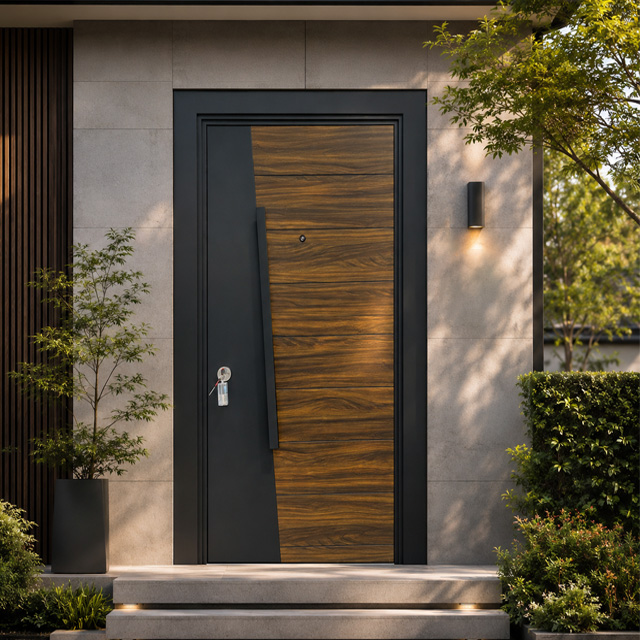
An offset pivot divides the leaf into a larger opening section and a smaller tail section. Both sections move around the pivot axis, so space must be available on both sides of the system.
Pivot systems are frequently used for wide, tall, or heavy entrance doors. Properly specified pivot hardware transfers the weight through the bottom pivot into the floor, threshold, or supporting structure. This makes the system suitable for oversized doors with a strong architectural presence.
However, a pivot door cannot be enlarged without limits. Its maximum dimensions and weight depend on the pivot hardware capacity, door construction, materials, supporting structure, and installation conditions.
Hinged doors can also be manufactured in large sizes. As their weight increases, they require stronger frames, reinforced hinge areas, heavy-duty hinges, and secure anchoring.
A hinged door rotates from its side edge, making its swing path relatively easy to calculate.
With an offset pivot door, part of the leaf remains between the pivot axis and the side jamb. This section occupies part of the opening and may reduce the effective clear passage. Two doors with the same overall width may therefore provide different clear opening widths.
A pivot door specification should confirm:
· Overall structural opening
·Pivot offset distance
·Actual door leaf width
·Opening angle
·Interior and exterior clearance
·Final clear passage width
·Accessibility, emergency-exit, and local building-code requirements should also be checked when relevant.

Pivot doors are known for their clean, modern appearance. Concealed pivot hardware reduces visible hinges, while the large leaf and unusual movement create an impressive entrance.
They are commonly used in modern villas, luxury residences, hotels, showrooms, and commercial buildings.
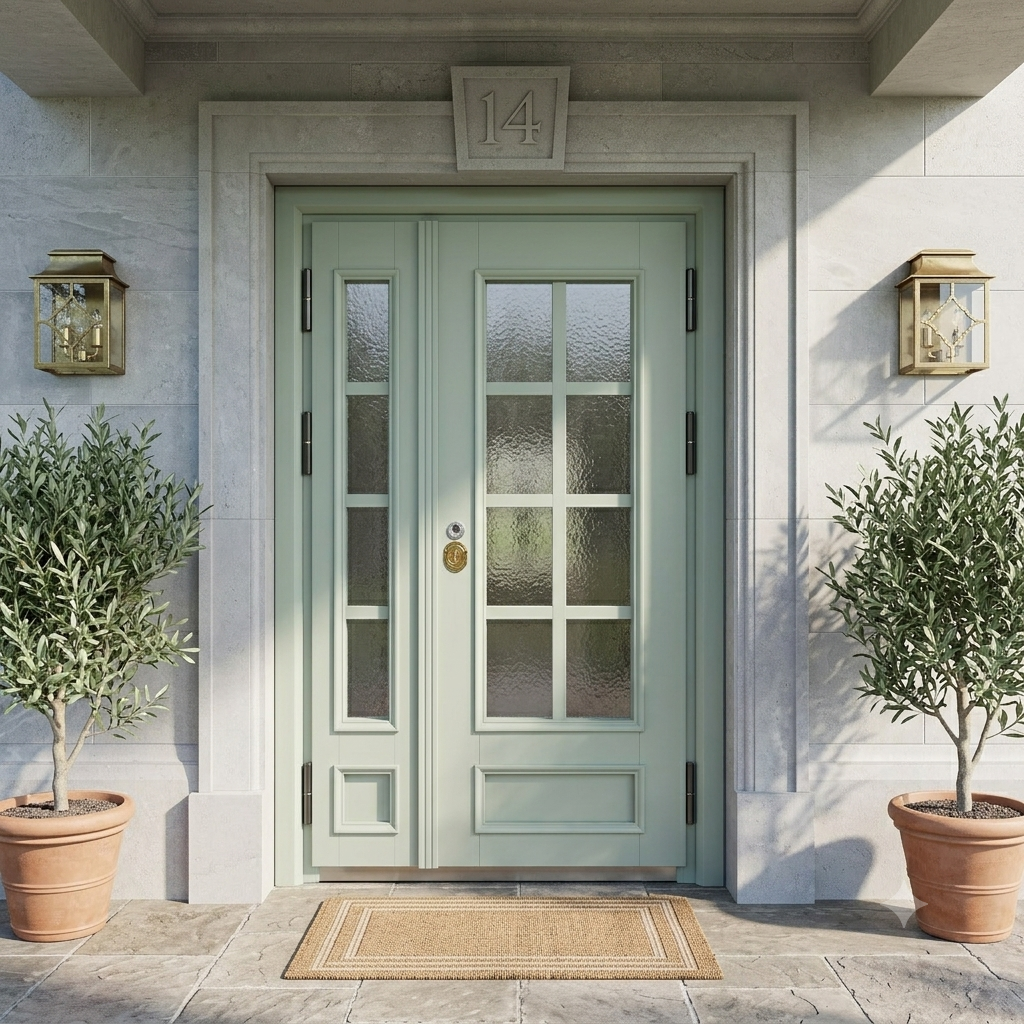
Hinged doors offer a broader range of traditional and modern styles. They are also easier to integrate with standard frames, conventional wall structures, and familiar installation systems.
A hinged door normally closes against continuous seals around the frame. This makes it easier to create consistent compression for air, dust, water, sound, and thermal control.
Pivot doors can also be used as exterior entrance doors, but their sealing system requires more careful design. The pivot area, bottom edge, and threshold may require specialized seals, automatic drop seals, or a dedicated threshold system.
For rainy, windy, coastal, or exposed locations, buyers should confirm drainage, surface treatment, hardware corrosion resistance, and installation details. Exterior performance cannot be judged by appearance alone.
Hinged-door installation is widely understood. When the frame is level, plumb, securely anchored, and correctly adjusted, the door can normally operate reliably.
Pivot-door installation requires greater precision. The top and bottom pivot points must align on the same vertical axis. Installers must also consider the structural floor, finished floor level, threshold, and any recessed pivot components.
Incorrect alignment can cause the leaf to lean, rub, close improperly, or operate unevenly. Project measurements and installation preparation should therefore be confirmed before production.
A pivot door is not automatically more or less secure than a hinged door. Security depends on the complete system, including:
·Door leaf and frame construction
·Pivot or hinge capacity
·Lock body and locking points
·Reinforcement around locks and pivots
·Frame anchoring
·Installation quality
A pivot entrance door can use a multipoint lock, smart lock, reinforced frame, and anti-pry construction. Similar security options are also available for conventional hinged doors.
Pivot doors generally require specialized hardware, precise manufacturing, and more complicated installation. Their total cost is therefore often higher than that of a comparable hinged door.
Hinged doors offer more hardware choices and are generally easier to install, adjust, and repair. Replacing conventional hinges or servicing the locking system is usually straightforward.
Pivot-door maintenance should include inspections of the pivot system, closing function, locks, clearances, and bottom seals. Concealed components should also remain accessible for adjustment or servicing.
Feature | Pivot Door | Hinged Door |
Rotation system | Top and bottom pivots | Side-mounted hinges |
Typical application | Large architectural entrances | Standard and large entrances |
Swing space | Clearance needed around both sides of the pivot | Mainly occupies the opening direction |
Appearance | Modern and architectural | Wide variety of styles |
Weather sealing | Requires specialized design | Generally easier to seal |
Installation | High precision required | More conventional |
Cost | Usually higher | Usually more economical |
Maintenance | Pivot and bottom systems require inspection | Hinges and locks are easier to service |
Choose a pivot door when the project requires a large door leaf, concealed hardware, and a strong modern architectural statement.
Choose a hinged door when weather sealing, installation simplicity, cost control, and convenient maintenance are higher priorities.
The final decision should also consider the opening size, wall structure, door weight, clear passage width, climate, hardware capacity, and project budget.
No. Pivot hardware is suitable for large doors, but pivot doors can also be produced in standard sizes.
Yes. It requires suitable weather seals, drainage, surface treatment, threshold design, and corrosion-resistant hardware.
An offset pivot creates movement on both sides of the axis. The front, rear, and tail clearances must therefore be calculated.
Security depends on the structure, locks, locking points, frame anchoring, and installation—not only on the opening system.
PHIPULO can evaluate custom pivot-door requirements according to the opening size, design, materials, opening direction, locking system, pivot hardware, and project conditions.
Pivot doors provide a dramatic architectural entrance and can support large, heavy door leaves when the system is correctly designed. Hinged doors offer familiar operation, simpler installation, easier sealing, and generally lower costs.
Before choosing, confirm the opening dimensions, pivot position, clear passage, installation environment, and hardware capacity. A reliable entrance depends on the correct combination of the door leaf, frame, hardware, locking system, and installation conditions.